A reflection for Holy Week and beyond
A reflection for Holy Week and beyond
On the day that Jesus died, darkness came over the whole land, the earth shook, rocks
split and the veil in the temple was torn in two. Various explanations have
been found: a solar eclipse, an earthquake. But the Gospel writers were saying that
the impact of Jesus’ death was cosmic. That these events echo the ‘earthquakes’
he’d had caused throughout his life – especially in the last week.
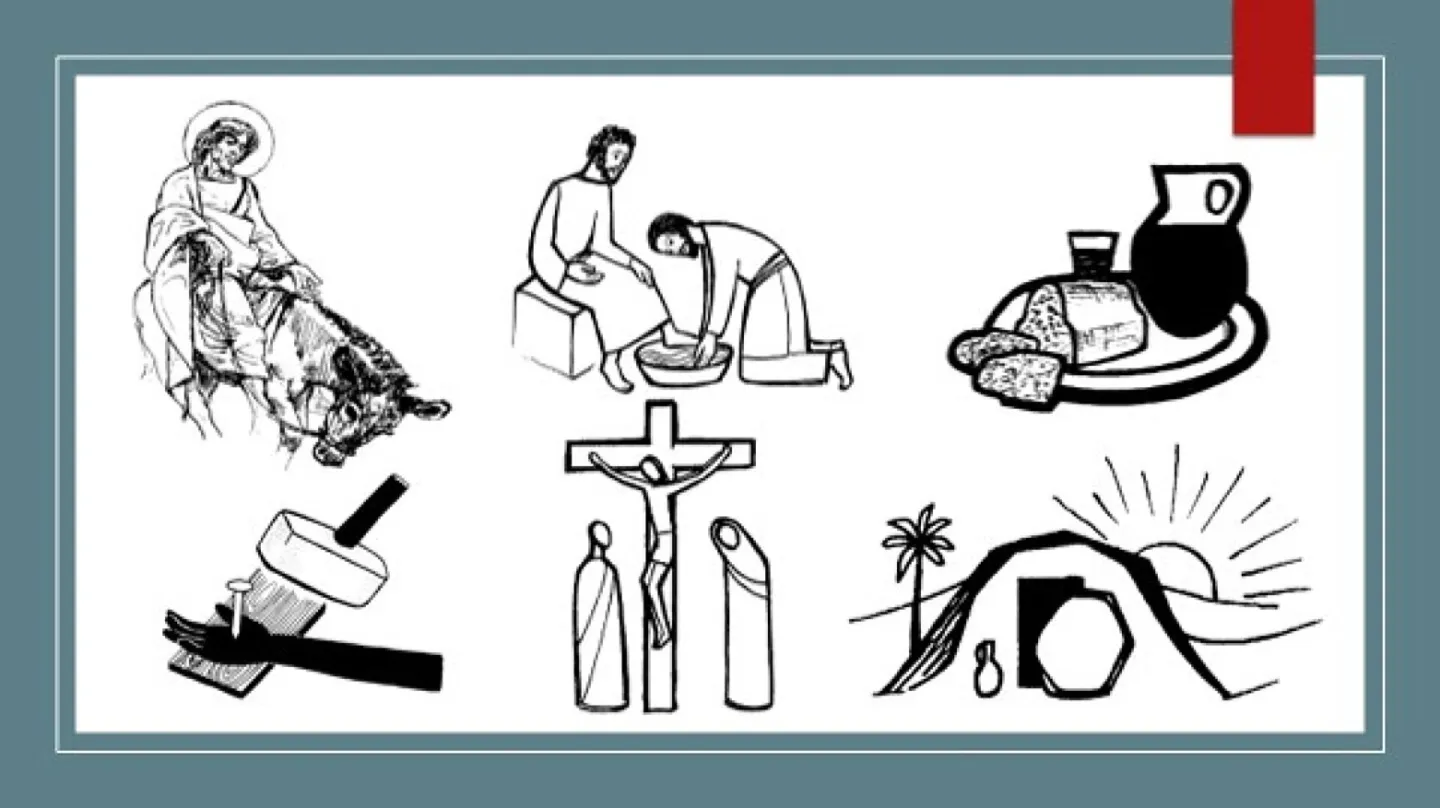
Jesus arrived in Jerusalem in humility, on a donkey. He questioned the power of the religious
leaders, in his teaching, and by turning over the tables in the temple. He was anointed
by a woman in Bethany against all social rules. He took the place of the
servant, washing the disciples’ feet and then taught them again, about the
unconditional love of God. Then before he was arrested, he prayed in the garden
of Gethsemane, preparing to hand himself over to those who would kill him.
Jesus was re-shaping the world into God’s kingdom of love and peace, through word, action
and prayer, living as God longs for all the humans being made in God’s image to
live. And the world fought back, as it always has and always will, when faced
with any challenge to what many call ‘empire’: the religious, social, economic
power structures rooted in the exploitation of others through colonialism, sexism, racism, ableism,
and more. All the mentalities, mindsets and attitudes that undergird
violence and injustice.
In his letter to the church in Philippi, the Apostle Paul sums up the whole arc of
Jesus’ life, using the ancient hymn. (Philippians 2.5-11)
Let the same mind be in you that was in Christ Jesus,
who, being in the form God,
did not regard equality with God
something to be grasped,
but emptied himself,
taking the form of a slave,
being made
in human likeness.
And being found in human form,
he humbled himself
and became obedient to death -
even death on a cross.
Therefore God exalted
him even more highly
and gave him the name
that is above every other name,
so that at the name given to Jesus
every knee should bend,
in heaven and on earth and under the earth,
and every tongue should confess
that Jesus Christ is Lord,
to the glory of God the Father.
Jesus’ way, the way of the ‘earthquake’ God longs for, was not to exploit his divine nature,
but to live in obedience to his vulnerable humanity. He always knew he would suffer
and be killed, because giving life to those – who according to those who rule
‘empire’ by grasping power, lording it over others and living entitled lives – are
‘undeserving’, was bound to produce a reaction. When sin defeats love on the
cross, it seems as if all is lost, and humility, service, and vulnerability are
proved worthless. But love will not use violence to overcome sin, it cannot if
it is to be true to itself, nevertheless this ancient hymn says ‘Therefore.’
And it’s a triumphant ‘therefore’! ‘Therefore, God exalted’ Jesus, as the power
of cross – of love, vulnerability and humility – is celebrated.
The surprising – maybe even shocking thing – is that this isn’t just about Jesus. When Paul introduces
the hymn with these words: ‘Let the same mind be in you that was in Christ
Jesus’, he’s saying, this is the calling of all human beings. If you have the
same attitude, the same mindset, mentality, heart, a heart rooted in the love,
humility and vulnerability, you will do greater things than Jesus! And
together, you will cause ‘earthquakes’ that uproot those who are sure they can
win using violence and injustice, by tyrannising, persecuting and oppressing some
of God’s beloved people. So, Paul’s invitation to us, is to consider what looks
like in our lives.
- How is your mind-set rooted in the values of ‘empire’?
- Where you find ‘empire’ attitudes – and you will because they undergird the society in which we live and parts of church life too – how are you emptying yourself of them in order to live more consciously in God’s kingdom?
- How will you contribute to creating the ‘earthquakes’ needed to undo the structures of ‘empire’ in the church and in the world?