Creation Time
Creation Time
EXODUS 3:1-5
Now Moses was keeping the flock of his father-in-law, Jethro, the priest of Midian, and he led his flock to the west side of the wilderness and came to Horeb, the mountain of God. 2 And the angel of the Lord appeared to him in a flame of fire out of the midst of a bush. He looked, and behold, the bush was burning, yet it was not consumed. 3 And Moses said, “I will turn aside to see this great sight, why the bush is not burned.” 4 When the Lord saw that he turned aside to see, God called to him out of the bush, “Moses, Moses!” And he said, “Here I am.” 5 Then he said, “Do not come near; take your sandals off your feet, for the place on which you are standing is holy ground.”
1st September – 4th October is an annual ecumenical celebration designated as The Season of Creation. A time to renew our commitment to the Creator and to all creation. A task that, as this summer has reminded us, is more urgent than ever. My first memory of hearing about the way earth’s climate was changing was in the 1980s: 50 years after the first proof that the global temperature was rising and 30 years after it was recognised that fossil fuels were to blame. We have been slow to react as individuals, churches and nations, and we are now living with the consequences. Yes, things are changing, and a season dedicated to creation is evidence of that, but I suspect the human race won’t take effective action we learn to see differently. Letting go of what the theologian Barbara Brown Taylor calls ‘the sort of hubris that doesn’t think twice about gobbling earth to gorge the self.’ And coming to understand the deep relationship that exists between all that has life.
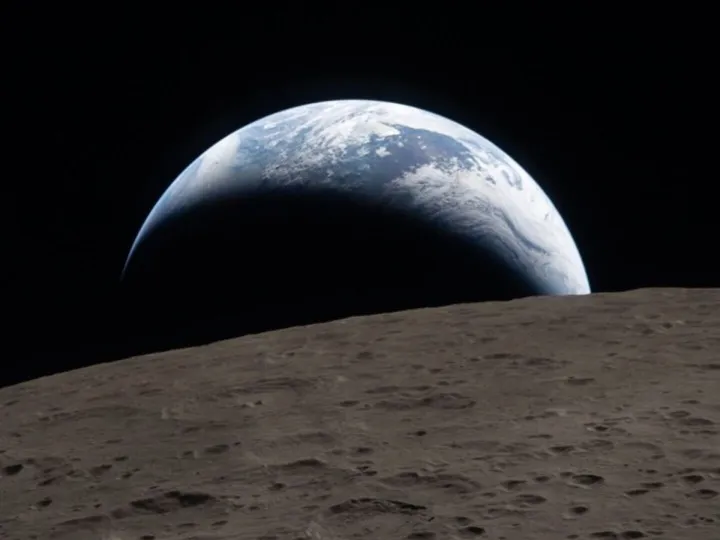
A major breakthrough, for many people, came in 1968 when we saw the earth from space. More recently, we’ve been reminded once again, of the beauty and fragility of our planet. But even without pictures such as these children, contemplatives of all faith traditions and none, philosophers, scientists and Jesus himself grasped the deep truth that the suffering or flourishing of other people, creatures and of the whole planet is related to our own. So, what helped you to grasp this, and see creation differently? These are a few of the people and ideas that have inspired me.
One of my favourite writers is Robert Macfarlane. He writes about mountains, old pathways, life underground, birds and most recently, rivers. His latest book has the title, ‘Is a river alive?’, and when he asked the question of his 9-year-old son, he said ‘Of course!’ Jesus affirmed the wisdom of children when he quoted Psalm 82: ‘Out of the mouths of babes…’
Nan Shepherd wrote ‘The Living Mountain’ in the 1940s. She describes her relationship with the Cairngorms as ‘a traffic of love’ – implying exchange and mutuality – and says that often ‘the mountain gives itself most completely when I have … gone out merely to be with the mountain as one visits a friend’. Jesus often went into the mountains to pray…
Meister Eckhart was born in Germany in the 13th century. He was a Dominican priest, philosopher and mystic. In one of his sermons, he said, ‘All creatures are words of God. My mouth expresses and reveals God but the existence of a stone does the same.’ When the crowds welcomed Jesus as he entered Jerusalem and the Pharisees told him to stop them, he said: ‘if these were silent, the stones would shout out…’
Thich Nhat Hanh was a Vietnamese Buddhist monk and peace activist. In the refectory of the monastery he founded there is a calligraphy that reads, ‘The bread you hold in your hand is the body of the whole cosmos.’ Writing about words used at communion, ‘The body of Christ’, St Augustine wrote ‘Be what you see; receive what you are’…
The Season of Creation ends on 4th October. St Francis of Assisi’s saint’s day. One of his compositions is the Canticle of the Creatures or Praise of the Creatures. In it, he sees planets, the elements, and earth itself as our relations. These are some of its phrases:
Praised be You my Lord with all Your creatures, especially Sir Brother Sun…
Praised be You, my Lord, through Sister Moon and the stars…
Praised be You, my Lord, through Brothers Wind and Air,
Praised be You my Lord through Sister Water…
Praised be You my Lord through Brother Fire…
Praised be You my Lord through our Sister, Mother Earth…
These thoughts and images have challenged me to see beyond the words and ideas of the people who wrote them, to deeper truths about God and all created things, including myself. They invite me to turn aside, the pay attention, as Moses did when he saw a bush burning that was not being consumed. Once God has his attention, God told him to remove his sandals, because he was standing on holy ground. Holy ground is a place of relationship. And when we take off our shoes and pay attention to creation without any agenda, other than to be with it, the barriers we place between human and other life are removed. And, just as God received Moses, and drew him into God’s life, so God and creation do with us. When we come to see all creation – including rivers, mountains and rocks, birds, animals and plants and other human beings – as living beings requiring the honour and respect of mutual relationships it changes to way we live, the choices we make, and the way we vote.
So, what I’d like to invite you to do this month (if you don’t already), is to take time to stop, look and listen. Sit in silence. Look at what is around you and choose one thing to focus on indoors or outdoors. When ideas about it or anything else come to mind, let them go, and refocus on it. Just sitting with it. Looking at it. Listening to it. Allow it to draw you in. Listen for what God – though it – might say to you. And if there isn’t anything that’s fine! Just enjoy stopping, looking, listening.
Rev. Sue Keegan von Allmen